

- Home
- About
- Skin
- Body
- Hair
- Technology
- Academy
- Gallery
- Contact
Platelet Rich Plasma (PRP)
A regenerative dermatology treatment that uses your body’s natural growth factors to improve acne scars, skin texture, and overall skin quality.
PRP Treatment for Skin Repair and Renewal
Looking to improve acne scars, dull skin, or uneven texture? PRP (Platelet-Rich Plasma) therapy uses your body’s natural growth factors to stimulate collagen production and support skin regeneration. At Kandhari Dermatology, PRP treatments are customised to improve skin texture, enhance healing, and restore smoother, healthier-looking skin over time.
- 30–45 minute procedure
- Supports natural skin regeneration
- Improves acne scars and texture
- Minimal downtime
What is Platelet Rich Plasma for Acne Scars?
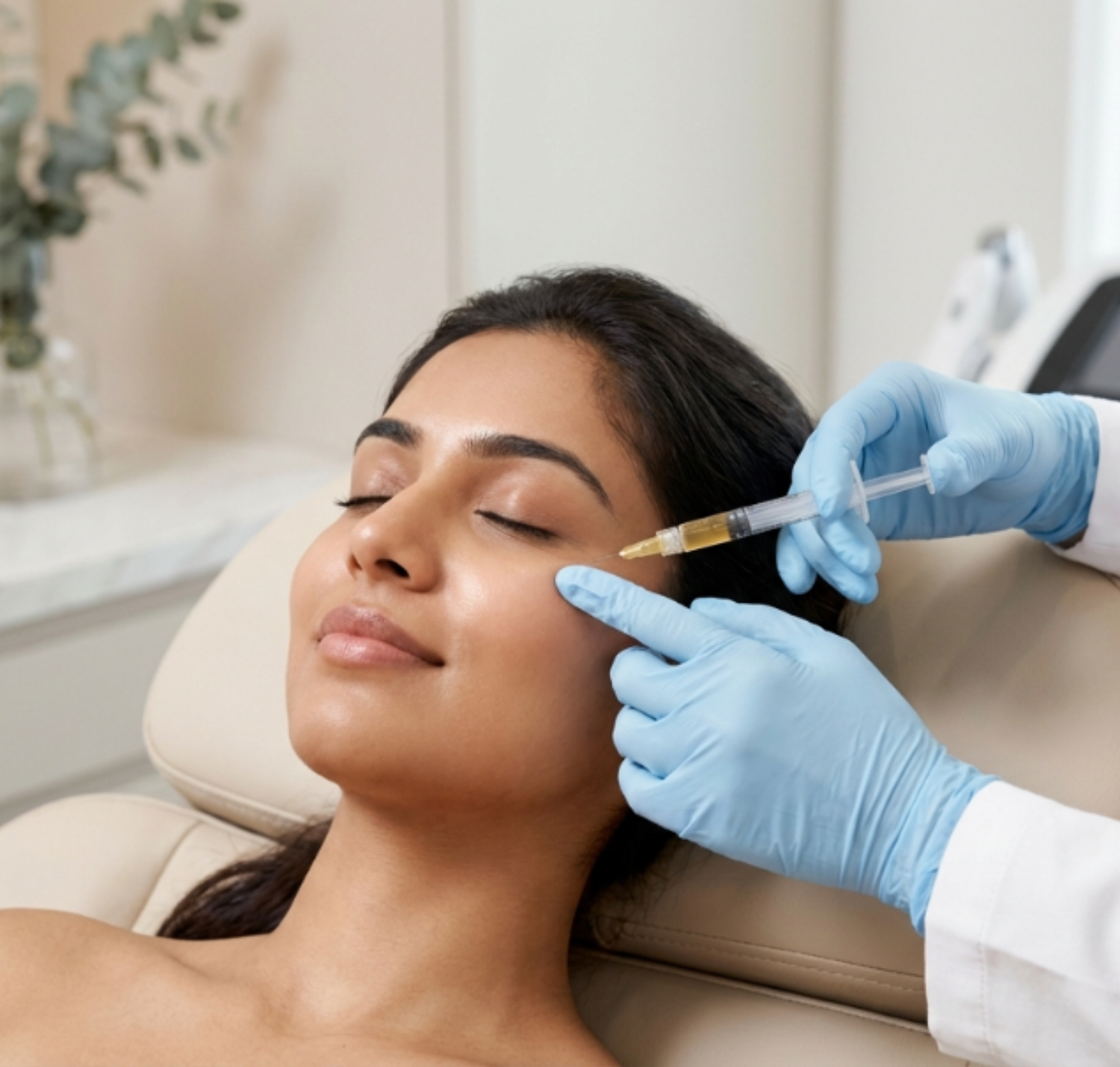
Platelet Rich Plasma (PRP) therapy for acne scars is a regenerative dermatology treatment that uses the patient’s own blood-derived growth factors to accelerate skin healing and collagen synthesis. A small blood sample is processed in a centrifuge to concentrate the platelet-rich fraction, which is then delivered into the skin through microinjections or in combination with microneedling. PRP releases growth factors that stimulate fibroblast activity, enhance new collagen and elastin production, and improve overall skin quality. When used alongside procedures such as subcision, MNRF, or CO2 laser, PRP significantly enhances and prolongs the outcomes of scar treatments.
PRP is suitable for individuals seeking to improve acne scar appearance, skin texture, and overall skin quality using a natural, regenerative approach. It is safe for all skin tones and works particularly well as part of a combination scar treatment programme. Patients with certain blood disorders or those on blood-thinning medications may not be suitable candidates.
PRP accelerates the skin's natural healing response, enhances collagen production, and improves skin quality with minimal risk of adverse reactions due to its autologous (self-derived) nature. When combined with procedures such as microneedling or subcision, PRP amplifies results and shortens recovery time. Patients often notice improvements in skin texture, hydration, and radiance alongside scar improvement.
Avoid blood-thinning medications and supplements for one week before treatment. Stay well-hydrated in the days leading up to the procedure to support effective platelet collection. Avoid alcohol and vigorous exercise 24 hours before your appointment.
A small blood sample is drawn from your arm and processed in a centrifuge for approximately 10 minutes to concentrate the platelets. The prepared PRP is then injected into acne scar areas or applied in combination with a microneedling procedure. A topical anaesthetic is used to ensure comfort. The full session, including preparation, takes approximately 30–45 minutes.
Mild redness, swelling, and pinpoint marks are expected immediately after PRP treatment and typically resolve within 24–48 hours. Avoid washing the face for several hours after the procedure. Apply a gentle moisturiser and broad-spectrum sunscreen as advised. Refrain from makeup, active skincare ingredients, and strenuous activity for 24 hours.
PRP is derived from the patient's own blood, making it one of the safest aesthetic treatments available. Temporary redness, mild swelling, and bruising at injection sites are common and resolve quickly. Allergic reactions are extremely rare due to the autologous nature of PRP.
The cost of PRP treatment varies depending on the number of sessions, the area being treated, and whether PRP is used as a standalone or combined therapy. A personalised treatment plan with cost details will be provided during your dermatologist consultation.
Book a Consultation
Interested in natural acne scar treatment in Delhi? Book a consultation with Dr. Rajat Kandhari for PRP therapy — a regenerative treatment that uses your own growth factors to stimulate collagen production and improve scar appearance. As a standalone or combined treatment, PRP offers a safe, effective approach to acne scar management with minimal downtime and visible skin quality improvement.
Latest Blogs & Insights on Cosmetic Surgery

Frequently Asked Questions
PRP delivers concentrated growth factors directly into scar tissue, stimulating collagen production, accelerating healing, and gradually improving scar depth and skin texture.
A topical anaesthetic is applied before treatment to minimise discomfort. Most patients tolerate the procedure well with only mild sensations.
Typically three to four sessions spaced four to six weeks apart are recommended for acne scars. The ideal number varies based on scar severity.
Yes. PRP is routinely combined with microneedling, subcision, MNRF, or CO2 laser to enhance collagen stimulation and improve overall scar treatment outcomes.
Yes. PRP is derived from the patient's own blood and is therefore safe for all skin tones and types with minimal risk of adverse effects.
Initial improvements in skin quality and texture are often noticed after two to three sessions. Optimal scar improvement becomes apparent over three to six months as collagen continues to remodel.
Yes. PRP improves overall skin hydration, radiance, and texture alongside its scar-improving benefits.
Dr. Rajat Kandhari uses evidence-based PRP protocols tailored to individual skin concerns, combining PRP strategically with other treatments for comprehensive and effective acne scar management.